
Nearly half of all American adults have high blood pressure — and most of them feel completely fine.
Hypertension affects 47.7% of all US adults aged 18 and older, representing approximately 119.9 million Americans. Despite these numbers, many remain unaware of their diagnosis because high blood pressure typically causes no symptoms. Grow Forage Cook Ferment
That last part is what makes it so dangerous. High blood pressure — or hypertension — silently damages your arteries, heart, kidneys, and brain for years before the consequences show up. When they do, they often show up as a heart attack or stroke.
An estimated nearly four out of five US adults with hypertension have blood pressure above the 2025 AHA/ACC guideline goal of less than 130/80 mmHg. Related deaths have nearly doubled within the past two decades while treatment rates have stagnated. Slow Living Kitchen
The good news: lifestyle changes are genuinely powerful. For people with elevated or Stage 1 hypertension, evidence-based lifestyle modifications can lower blood pressure enough to delay or avoid medication entirely. Even for people who do need medication, lifestyle changes make the medication work better and reduce the required dose.
This guide covers 10 evidence-based methods — with the actual clinical data showing how many points each can drop your numbers — plus a clear explanation of when natural methods are not enough and you need medical care.
⚠️ Critical Medical Disclaimer: This article is for informational and educational purposes only. It does not constitute medical advice and is not a substitute for professional medical care. High blood pressure is a serious medical condition. Do not stop or adjust any prescribed medication without consulting your doctor. If your blood pressure is 180/120 mmHg or higher, or you have symptoms such as chest pain, severe headache, shortness of breath, vision changes, or weakness, seek emergency care immediately. Always consult a licensed healthcare provider before making significant changes to your diet, exercise, or health routine.
1. Understanding Blood Pressure Numbers First
Before you can manage your blood pressure, you need to understand what the numbers mean.
Blood pressure is measured in two numbers — written as systolic/diastolic — in millimeters of mercury (mmHg).
- Systolic (top number): The pressure in your arteries when your heart beats
- Diastolic (bottom number): The pressure when your heart rests between beats
Current 2025 AHA/ACC classification:
| Category | Systolic | Diastolic | |
|---|---|---|---|
| Normal | Under 120 mmHg | and | Under 80 mmHg |
| Elevated | 120–129 mmHg | and | Under 80 mmHg |
| Stage 1 hypertension | 130–139 mmHg | or | 80–89 mmHg |
| Stage 2 hypertension | 140+ mmHg | or | 90+ mmHg |
| Hypertensive crisis | 180+ mmHg | or | 120+ mmHg |
The lifestyle methods in this guide are most effective for people in the Elevated and Stage 1 categories. Stage 2 hypertension almost always requires medication alongside lifestyle changes. A hypertensive crisis requires immediate emergency care.
2. How Much Can Lifestyle Changes Actually Lower Your BP?
This is the question most guides skip — and it’s exactly what readers need to make informed decisions.
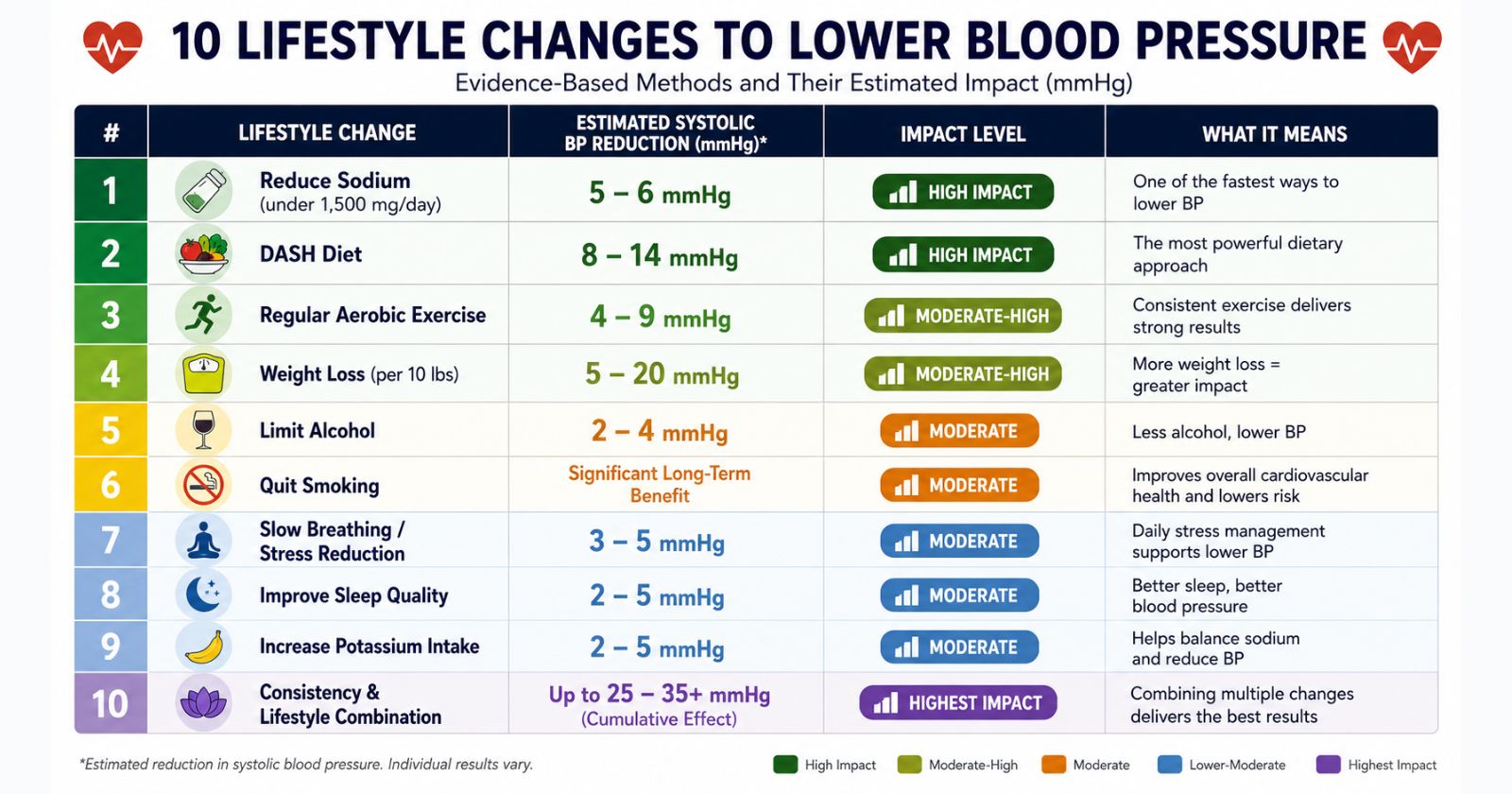
Here’s a summary of the maximum evidence-based mmHg reductions each lifestyle change can produce, based on current clinical literature:
| Lifestyle change | Estimated systolic BP reduction |
|---|---|
| Low-sodium diet (under 1,500 mg/day) | 5–6 mmHg |
| DASH diet | 8–14 mmHg |
| Regular aerobic exercise | 4–9 mmHg |
| Weight loss (per 10 lbs) | 5–20 mmHg |
| Limiting alcohol | 2–4 mmHg |
| Quitting smoking | Significant long-term benefit |
| Slow breathing / stress reduction | 3–5 mmHg |
| Improved sleep | 2–5 mmHg |
| Increasing potassium | 2–5 mmHg |
Even a small reduction in blood pressure may eliminate the need for blood pressure medication or lower your required dose, depending on the severity of hypertensive disease, according to Mass General Brigham interventional cardiologist Dr. Lola Ojutalayo. nih
Used together, these methods are cumulative. A person who significantly reduces sodium, follows the DASH diet, exercises regularly, and loses 10 pounds could see a systolic reduction of 25–35 mmHg — enough to bring many Stage 1 cases into the normal range without medication.
Pro Tip: Don’t try to implement all 10 methods simultaneously. Pick the two or three that fit your life most naturally and commit to those first. Sustainable partial implementation beats unsustainable total perfection every time.
3. Method 1: Reduce Sodium — The Single Highest-Impact Dietary Change
If you make only one dietary change, make it this one.
The 2025 AHA/ACC guidelines set a ceiling of 2,300 mg of sodium per day, with an ideal target of no more than 1,500 mg for most adults. To put that in perspective, the average American consumes over 3,400 mg daily — so even a partial reduction helps. Healthline
The mechanism is straightforward: sodium causes your body to retain water, which increases blood volume, which pushes against your artery walls harder with every heartbeat.
Most excess sodium comes from restaurant meals, processed foods, canned soups, deli meats, and bread — not from the salt shaker at the table. The shaker typically accounts for less than 10% of your sodium intake. The other 90% is hidden in packaged and prepared food. Healthline
Practical sodium reduction — what actually moves the needle:
- Swap canned soups (700–1,200 mg sodium per serving) for homemade or low-sodium versions
- Choose “no salt added” canned beans, tomatoes, and vegetables
- Cook at home more — restaurant meals average 1,500–2,300 mg of sodium per entrée
- Read nutrition labels: aim for products under 140 mg sodium per serving
- Use herbs, citrus, garlic, and spices instead of salt for flavor
A drop from 3,400 mg to 2,300 mg of daily sodium can reduce systolic blood pressure by 5–6 mmHg on its own — often within two to four weeks.
4. Method 2: The DASH Diet — Proven to Drop BP by 8–14 Points
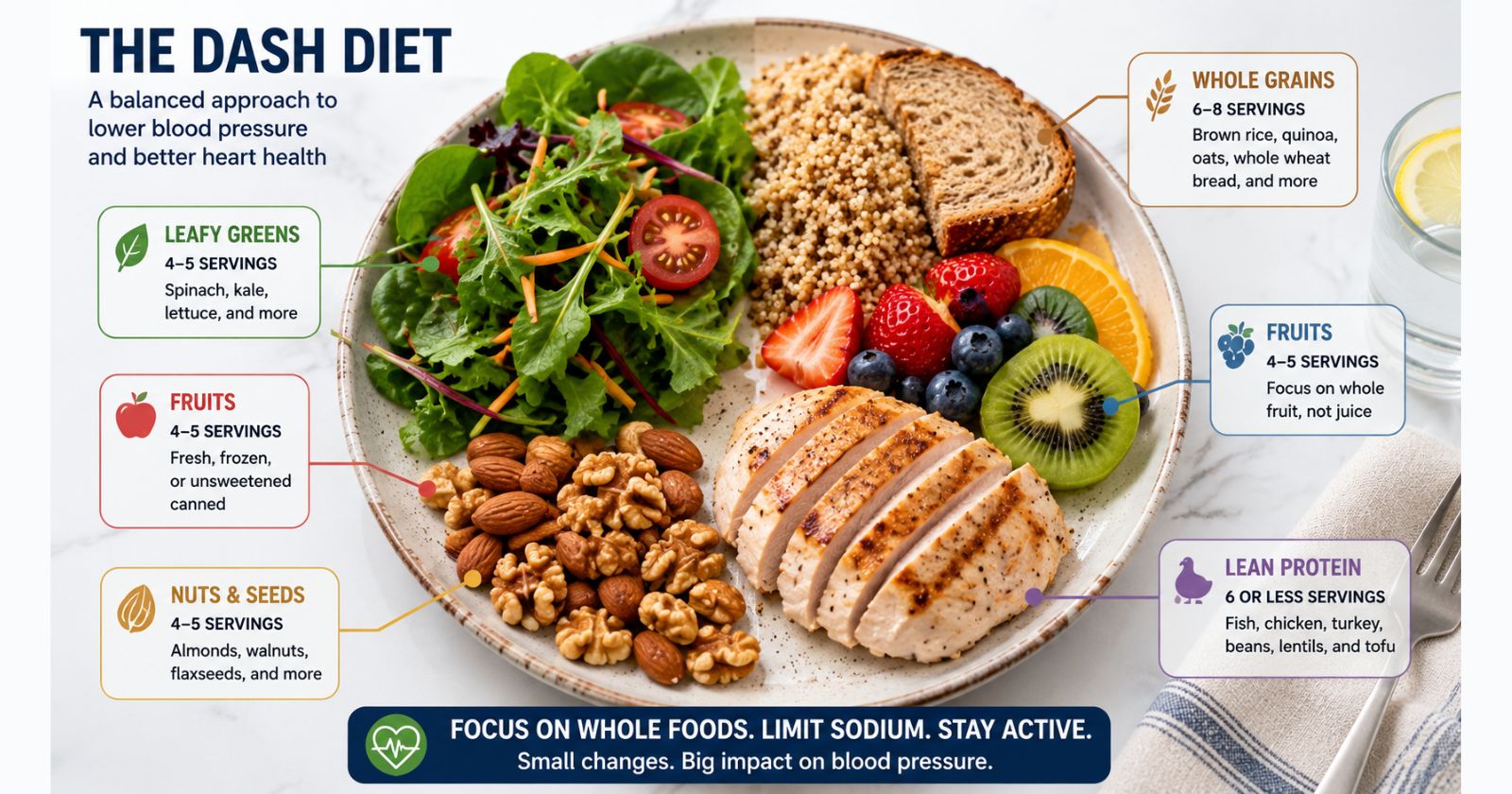
DASH (Dietary Approaches to Stop Hypertension) is the most thoroughly studied dietary pattern for blood pressure control. It was specifically designed by the National Heart, Lung, and Blood Institute to lower blood pressure — and the clinical evidence is strong.
Following DASH may help you lower your blood pressure by 8–14 points. Instead of prescribing exactly what to eat, the plan recommends eating plenty of foods packed with vitamins like potassium and magnesium — like leafy greens and beans — along with 4–5 servings each of fruits and vegetables per day, especially berries. You should have no more than 2,300 milligrams of sodium a day on DASH, with better results at no more than 1,500 milligrams. clinicaltrials
The DASH diet framework:
| Food group | Daily servings | Examples |
|---|---|---|
| Vegetables | 4–5 | Leafy greens, broccoli, carrots |
| Fruits | 4–5 | Berries, bananas, oranges, apples |
| Whole grains | 6–8 | Brown rice, oats, whole grain bread |
| Lean protein | 6 or less | Chicken, fish, turkey |
| Low-fat dairy | 2–3 | Low-fat yogurt, milk, cheese |
| Nuts and legumes | 4–5 per week | Almonds, lentils, kidney beans |
| Healthy fats | 2–3 | Olive oil, avocado |
| Sweets/added sugar | Under 5 per week | Limit significantly |
The DASH diet works on multiple levels simultaneously — it’s naturally low in sodium, high in potassium and magnesium, rich in fiber, and reduces the processed foods that drive blood pressure up. A 2025 analysis of 75 clinical trials found an association between dietary nitrate — found abundantly in leafy greens like spinach and arugula — and modest reductions in blood pressure, with effects also seen on vascular stiffness, an important marker of cardiovascular health. GoodRx
5. Method 3: Exercise — 30 Minutes That Changes Everything
Exercise is one of the most consistently supported interventions for blood pressure — and one of the most underused.
Walking for just 30 minutes a day can help lower your blood pressure. Getting more exercise helps reduce it even further. WebMD
The 2025 AHA/ACC guidelines recommend aiming for 150 minutes per week of moderate aerobic activity, plus strength training 2 days per week. That’s 30 minutes, five days a week — which most people can realistically achieve with a daily walk. Cleveland Clinic
Why exercise lowers blood pressure:
Regular aerobic exercise makes your heart stronger and more efficient. A stronger heart pumps blood with less effort, which reduces the force exerted on artery walls. Exercise also reduces arterial stiffness over time and helps with weight management — a secondary blood pressure benefit.
What types of exercise are most effective:
| Exercise type | BP benefit | Good options |
|---|---|---|
| Moderate aerobic | 4–9 mmHg reduction | Brisk walking, swimming, cycling, dancing |
| Vigorous aerobic | Slightly greater benefit | Jogging, aerobics classes, rowing |
| Resistance/strength | 2–4 mmHg reduction | Weight training, resistance bands |
| Isometric | Emerging evidence | Wall sits, plank holds |
The important caveat: exercise can temporarily raise blood pressure during the activity itself. People with Stage 2 hypertension or unknown BP should consult their doctor before beginning a new vigorous exercise program. Walking is safe for virtually everyone.
6. Method 4: Lose Weight — Even 5 Pounds Makes a Difference
Body weight and blood pressure are directly linked. Fat tissue — especially visceral fat around the abdomen — increases systemic inflammation, raises insulin resistance, and puts additional demand on the cardiovascular system.
“If you’re not already at a healthy weight, losing weight can positively impact your blood pressure,” says Dr. Ojutalayo, interventional cardiologist at Mass General Brigham. “If you have mildly elevated blood pressure, the initial goal is to get back to a healthy range with lifestyle changes before you move on to trying medication.” nih
The estimated reduction: roughly 1 mmHg per kilogram (2.2 lbs) of weight lost, with some studies showing 5–20 mmHg systolic reduction per 10 lbs lost depending on starting weight.
You do not need to reach an ideal body weight to benefit. Even a 5–10% reduction in body weight produces meaningful blood pressure improvements. For a 200-pound person, that’s just 10–20 pounds.
The most sustainable approach: combine the DASH diet and regular exercise — both of which lower BP independently and together also produce modest weight loss. Avoid extreme calorie restriction, which is difficult to sustain and can cause other health problems.
7. Method 5: Limit Alcohol
The relationship between alcohol and blood pressure is dose-dependent and well-established.
If you choose to drink alcohol, limit how often you drink and keep the amount small — that often means less than two drinks a day. One drink equals 12 fluid ounces of beer, 5 ounces of wine, or 1.5 ounces of 80-proof liquor. Drinking too much alcohol can make your blood pressure go up. Alcohol also can make blood pressure medicines less effective. Tea Drops
Alcohol can raise blood pressure in a dose-dependent way. If you drink regularly, cutting back often produces noticeable BP improvements. The best goal is abstinence. Otherwise, fewer than one drink per day for women or fewer than two drinks per day for men. Cleveland Clinic
The mechanism: Alcohol stimulates the sympathetic nervous system, promotes sodium retention, and can disrupt sleep — all of which raise blood pressure. Regular heavy drinkers who significantly reduce or eliminate alcohol often see systolic reductions of 2–4 mmHg within weeks.
8. Method 6: Quit Smoking
Smoking raises blood pressure. Stopping smoking helps lower blood pressure. It also can lower the risk of heart disease and improve overall health, possibly leading to a longer life. Tea Drops
The mechanism is direct: nicotine causes an immediate spike in heart rate and blood pressure with every cigarette. Over time, smoking also stiffens artery walls and promotes plaque buildup — independently raising long-term cardiovascular risk.
Blood pressure begins improving within hours of quitting. Over weeks and months, the cardiovascular risk reduction from quitting smoking is substantial — often exceeding the benefit of most other lifestyle changes combined. If you smoke and have high blood pressure, quitting is the single most impactful step you can take for your heart health overall.
Resources to help: the quitline at 1-800-QUIT-NOW (1-800-784-8669) and smokefree.gov offer free, evidence-based support.
9. Method 7: Slow Breathing and Stress Reduction
Chronic stress activates your body’s “fight or flight” system — flooding your bloodstream with adrenaline and cortisol, which raise heart rate and constrict blood vessels.
Your body’s primary stress hormone increases heart rate, tightens blood vessels, and promotes sodium retention. Over time, these effects compound. The 2025 guidelines list stress management as a recommended lifestyle intervention. Approaches with the most supporting evidence include regular physical activity, mindfulness-based practices, slow breathing exercises, and adequate sleep. Healthline
The 4-7-8 breathing technique — one of the most evidence-supported breathing methods for acute BP reduction:
- Exhale completely through your mouth
- Close your mouth and inhale quietly through your nose for 4 seconds
- Hold your breath for 7 seconds
- Exhale completely through your mouth for 8 seconds
- Repeat 4 cycles, twice daily
This technique activates the parasympathetic nervous system — the “rest and digest” counterpart to the stress response — which directly lowers heart rate and blood pressure.
Both meditation and deep breathing can activate the parasympathetic nervous system, which helps slow your heart rate and lower blood pressure. WebMD
Other evidence-supported stress reduction approaches: yoga (combines physical activity with controlled breathing), progressive muscle relaxation, and regular time in nature. Stress reduction works best as part of a broader strategy rather than a standalone fix — but the clinical evidence for its contribution is solid.
10. Method 8: Improve Your Sleep (Including Sleep Apnea)
Sleep and blood pressure have a bidirectional relationship that most people don’t fully appreciate.
Getting fewer than seven hours of sleep every night for weeks can play a role in high blood pressure. Tea Drops
During sleep, blood pressure naturally dips by 10–20% — a pattern cardiologists call “dipping.” People who don’t dip (called “non-dippers”) have significantly elevated cardiovascular risk. Poor sleep prevents this nightly dip and keeps blood pressure elevated around the clock.
Sleep apnea deserves special mention. Obstructive sleep apnea — where breathing repeatedly stops during sleep — is one of the most common and most underdiagnosed causes of treatment-resistant hypertension.
Poor sleep and sleep apnea are common contributors to hypertension. Cleveland Clinic
If you snore loudly, wake up unrefreshed, or have been told you stop breathing in your sleep, ask your doctor about a sleep study. Treating sleep apnea with a CPAP device often produces meaningful blood pressure reductions that no amount of dietary change will achieve — because the underlying cause is nighttime oxygen deprivation.
Sleep hygiene habits that support BP control:
- Maintain consistent wake and sleep times, even on weekends
- Keep your bedroom cool, dark, and quiet
- Avoid screens 30–60 minutes before bed
- Limit caffeine after 2 p.m.
- Avoid alcohol close to bedtime — it fragments sleep architecture
11. Method 9: Increase Potassium — The Counter to Sodium
Potassium and sodium have a counterbalancing relationship in the body. When potassium intake is high, the kidneys excrete more sodium — which reduces blood pressure.
Eating fresh fruits and vegetables, which are rich in potassium, can help lower blood pressure. Be sure to discuss a potassium-rich diet with your doctor before starting, especially if you are taking blood pressure medication. Some blood pressure medicines inherently increase the potassium in the body — if you pair these with a high-potassium diet, the level may get too high, which can be dangerous. WebMD
Best food sources of potassium:
| Food | Potassium content | Bonus benefits |
|---|---|---|
| Bananas | ~422 mg each | Portable, easy, no prep |
| Sweet potatoes | ~694 mg (1 medium) | High fiber, vitamin A |
| Spinach | ~839 mg (1 cup cooked) | Also high in magnesium and nitrates |
| Avocado | ~975 mg (1 medium) | Healthy fats too |
| White beans | ~1,189 mg (½ cup) | Also high in fiber and protein |
| Salmon | ~628 mg (3 oz) | Also provides omega-3 fatty acids |
The daily adequate intake for potassium is 2,600 mg for women and 3,400 mg for men. Most Americans fall significantly short of this. Increasing potassium through whole foods is safe for most people — but the supplement form and high potassium foods can be dangerous for people with kidney disease or those taking certain BP medications. Always check with your doctor first.
Magnesium also plays a role in blood vessel relaxation and is one of the few supplements with decent evidence behind it for blood pressure. A recent systematic review and meta-analysis of randomized trials found that supplementation does modestly lower blood pressure, with a median dose of 365 mg of elemental magnesium over a median of 12 weeks. Food sources include dark leafy greens, nuts, seeds, legumes, and whole grains. Healthline
12. Method 10: Monitor Caffeine and Try Dark Chocolate
Caffeine
Caffeine temporarily raises blood pressure — especially in people who are not regular consumers. The spike usually peaks within 30–60 minutes and resolves within a few hours. For regular coffee drinkers, tolerance develops and the spike is smaller.
Current research does not show that moderate habitual coffee consumption significantly raises long-term blood pressure in most people. However, if you are sensitive to caffeine or have poorly controlled hypertension, monitoring your response to caffeine is worthwhile. A simple self-test: check your BP 30–60 minutes after a cup of coffee and compare to your baseline reading.
Dark Chocolate
This one surprises most people — but the evidence is real.
Dark chocolate (70% cacao or higher) contains flavanols — plant compounds that stimulate nitric oxide production, which relaxes blood vessels and reduces pressure. Multiple studies have shown a modest systolic reduction of 2–3 mmHg with regular dark chocolate consumption. The key word is dark — milk chocolate has too little cacao and too much sugar and fat to replicate the effect.
A square or two of high-cacao dark chocolate per day is the evidence-based amount. More is not better — the calorie cost outweighs additional benefit.
13. Home Blood Pressure Monitoring: Why It Matters More Than You Think
This section addresses the “silent killer” problem directly.
The silent nature of high blood pressure is perhaps its most dangerous characteristic — with nearly half of all American adults affected yet many remaining unaware of their diagnosis. Grow Forage Cook Ferment
“White coat hypertension” — elevated readings caused by anxiety in a medical setting — means your doctor’s office reading may not represent your true baseline. Conversely, some people have normal readings in the office but elevated readings throughout the day — called “masked hypertension.”
Why home monitoring matters:
- Gives you an accurate picture of your real baseline over time
- Shows whether lifestyle changes are actually working
- Captures the natural morning surge when BP is highest
- Removes white coat anxiety from the equation
- Allows you to track trends before your next appointment
How to take an accurate home reading:
- Sit quietly for 5 minutes before measuring
- Keep your feet flat on the floor, back supported
- Rest your arm at heart level on a surface
- Avoid coffee, exercise, and smoking for 30 minutes before measuring
- Take two readings, one minute apart, and average them
- Measure at the same times each day — morning and evening are recommended
Pro Tip: Take your home blood pressure monitor to your next doctor’s appointment to compare against the office reading. This helps identify white coat hypertension and ensures your monitor is calibrated correctly.
For more health and lifestyle guides, browse InfoBrave’s Informative section — and explore InfoBrave for practical everyday guides on health, finance, and lifestyle.
14. When Natural Methods Aren’t Enough: Red Flags to Know
Lifestyle changes are powerful — but they are not appropriate as a sole treatment in every situation. Know when to seek medical care.
Seek emergency care immediately if:
- Your blood pressure reads 180/120 mmHg or higher
- You have chest pain, shortness of breath, or back pain
- You experience sudden severe headache, vision changes, or confusion
- You have weakness, numbness, or difficulty speaking
If your blood pressure is higher than 180/120 mmHg, repeat the reading after a short wait and check for symptoms like chest pain, shortness of breath, back pain, weakness or numbness, vision changes, or trouble speaking. If any of these are present, seek emergency care immediately. Cleveland Clinic
Consult your doctor promptly if:
- Your readings consistently show Stage 2 hypertension (140/90 or higher)
- You’ve been trying lifestyle changes for 3–6 months without improvement
- You have diabetes, kidney disease, or a history of heart disease or stroke — these require lower BP targets and almost always require medication alongside lifestyle changes
- You are pregnant — hypertension in pregnancy requires immediate medical management
One critical rule: If you’re already on blood pressure medication, do not stop it without your clinician’s guidance, even if you start seeing better numbers from lifestyle changes. Discuss any improvements with your doctor and adjust medication only under medical supervision. Cleveland Clinic
15. Frequently Asked Questions
How quickly can lifestyle changes lower blood pressure?
Results vary by method and individual. Sodium reduction can produce measurable drops within 2–4 weeks. Regular exercise shows effects within 4–6 weeks of consistent activity. Weight loss takes longer but produces larger reductions proportional to the amount lost. The DASH diet typically shows meaningful reductions within 2 weeks of consistent adherence. Most people who commit to multiple lifestyle changes simultaneously see measurable improvement within 4–8 weeks.
Can you truly reverse high blood pressure without medication?
For people with elevated blood pressure (120–129/under 80) and Stage 1 hypertension (130–139/80–89) with no other risk factors, lifestyle changes alone can often normalize blood pressure. “If you have mildly elevated blood pressure, the initial goal is to get back to a healthy range with lifestyle changes before you move on to trying medication,” says Dr. Ojutalayo of Mass General Brigham. For Stage 2 hypertension or people with additional risk factors, medication alongside lifestyle changes is typically necessary. nih
What foods should you avoid with high blood pressure?
The most important foods to limit are high-sodium processed foods (canned soups, deli meats, fast food, packaged snacks), excessive alcohol, full-fat red meat eaten in large quantities, and foods high in added sugar and refined carbohydrates. Restaurant meals are the biggest hidden source of sodium — a single entrée can contain a full day’s recommended sodium in one sitting.
Does drinking water lower blood pressure?
Adequate hydration supports healthy blood pressure by maintaining blood volume and kidney function. Dehydration can cause blood pressure to either drop (in some people) or rise (as the body compensates). Drinking enough water — generally 6–8 glasses per day — supports overall cardiovascular health, but drinking extra water beyond adequate hydration does not significantly lower blood pressure on its own.
What is the DASH diet and how much does it lower blood pressure?
The DASH diet (Dietary Approaches to Stop Hypertension) is a well-known, flexible eating plan meant to help manage and lower blood pressure. Following DASH may help you lower your blood pressure by 8–14 points. It emphasizes fruits, vegetables, whole grains, lean protein, and low-fat dairy, while limiting sodium, red meat, and added sugars. clinicaltrials
Is exercise safe if you already have high blood pressure?
Moderate aerobic exercise like brisk walking is safe for most people with high blood pressure and is actively recommended by the AHA. More vigorous exercise is also beneficial but should be started gradually. People with Stage 2 hypertension or unknown BP should consult their doctor before beginning a new vigorous exercise program. Exercise temporarily raises blood pressure during the activity but leads to lower resting blood pressure over time.
How many points can losing weight lower blood pressure?
Research suggests roughly 1 mmHg of systolic reduction per kilogram (about 2.2 lbs) of weight lost. A 10-pound weight loss can lower systolic blood pressure by 5–7 mmHg in many people, with some studies showing larger effects depending on starting weight and overall health. The benefit is most pronounced when weight is lost through a combination of dietary changes and regular physical activity.
Should I check my blood pressure at home?
Yes — home monitoring is recommended by both the American Heart Association and the American Medical Association. It gives a more accurate picture of your true blood pressure than a single office reading, allows you to track the effects of lifestyle changes, and helps identify white coat hypertension or masked hypertension. Use a validated, upper-arm cuff monitor for the most reliable readings.
You may also like: Why Is My Car Insurance So High? 11 Real Reasons (And How to Lower It in 2026)